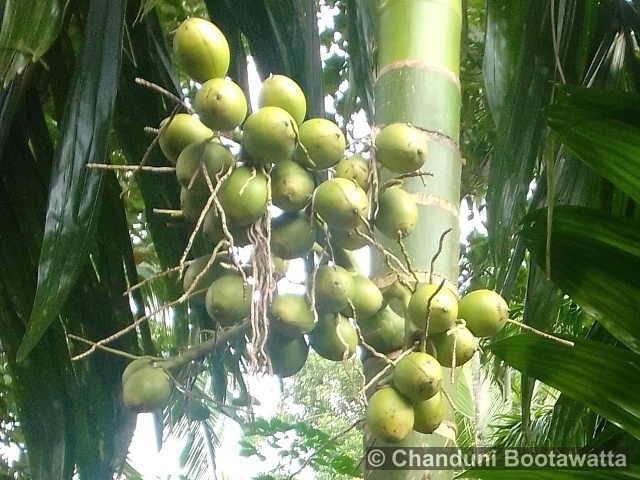
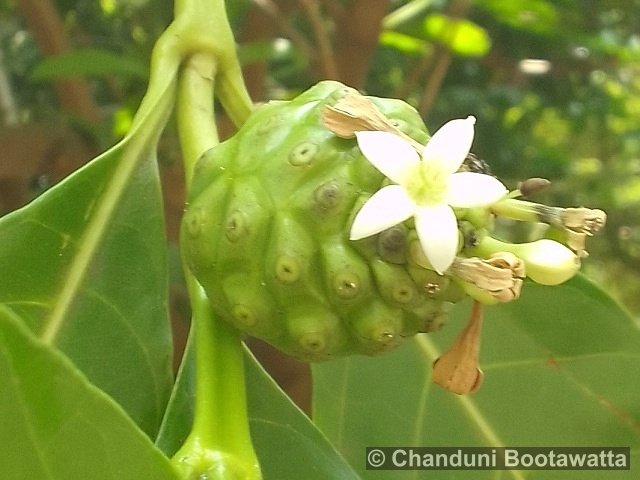
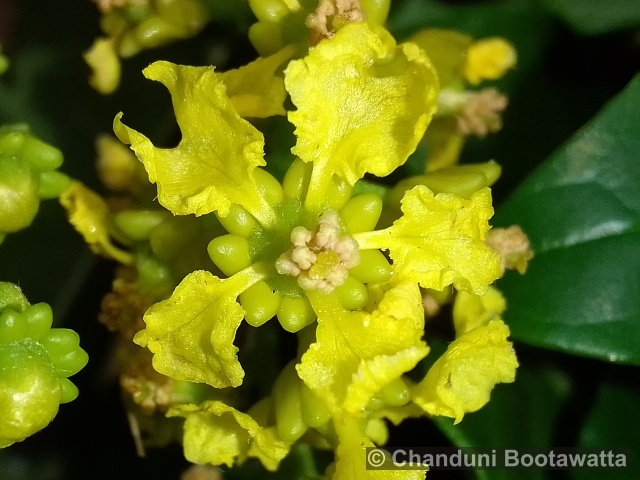
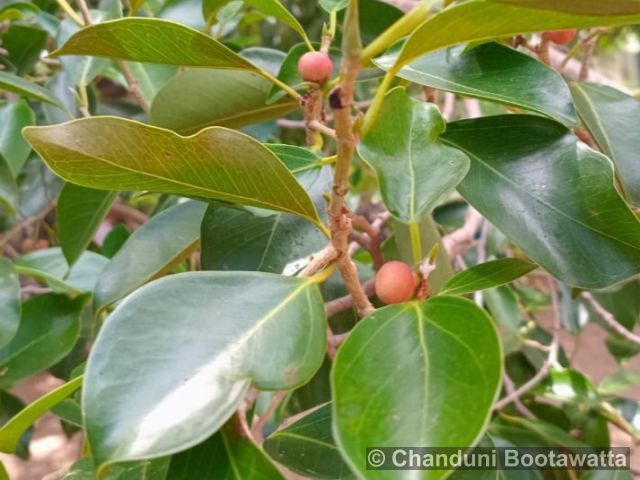
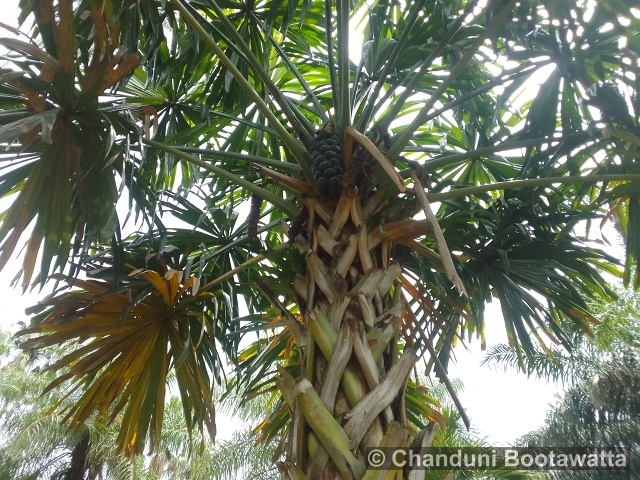
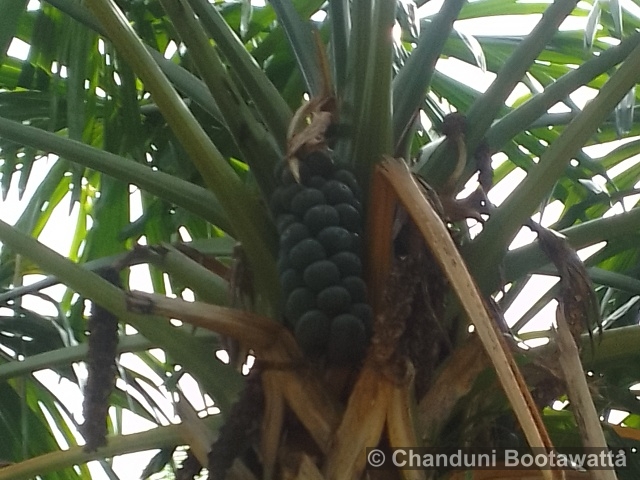
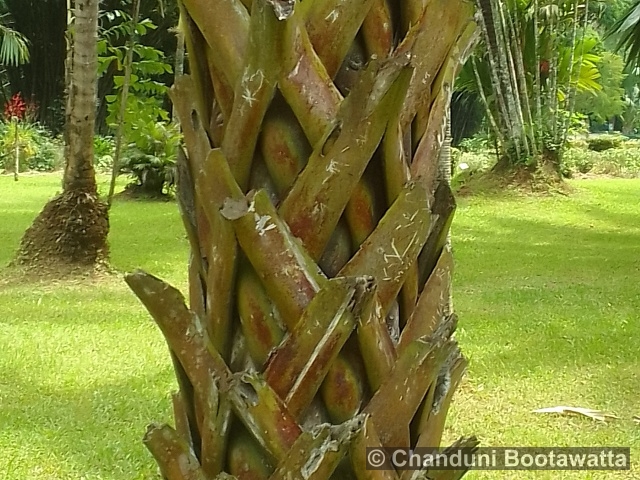
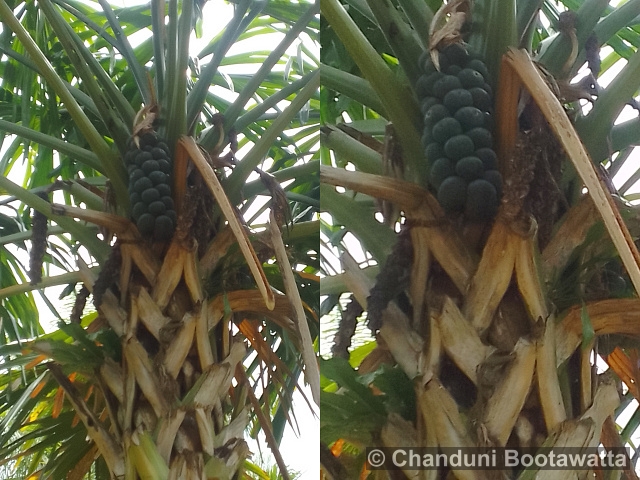
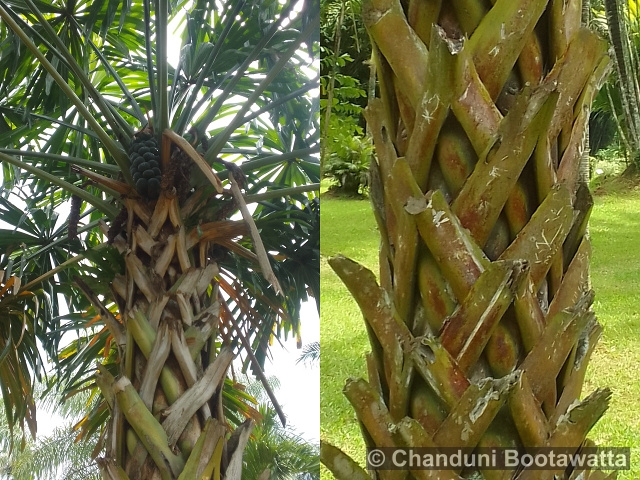
Description: Borassodendron machadonis is a majestic, solitary palm that can reach heights of 20 meters. Its robust trunk is typically covered in crisscrossing leaf bases when young, becoming bare and smooth with age. The leaves are massive, glossy, dark green fan-shaped fronds that can span over 3 meters across; they are deeply split into numerous drooping segments and sit atop long stalks (petioles) with razor-sharp margins capable of causing deep cuts. This dioecious species produces creamy-white, rope-like flowers on male plants and spike-like clusters on female plants. Its fruits are large, globose berries reaching 10–12 cm in diameter that turn purplish-green to brown when ripe and contain three seeds with uniquely grooved endosperm.
Substitutions – Borassus flabellifer (Palmyra Palm / Toddy Palm). A very close relative (same tribe, different genus) that is visually similar and equally massive, making it an excellent visual substitute in tropical landscapes. It is a key source for palm sugar, wine, and thatch across India and Southeast Asia. – Corypha utan (Buri Palm / Talipot Palm). One of the largest palms with immense fan leaves (up to 5 meters wide), offering a similar dramatic architectural statement in a landscape. It is also used traditionally for its leaves (thatch, mats) and its trunk for a source of sago. – Livistona chinensis (Chinese Fan Palm). A popular, smaller, and more readily available substitute for a large garden or indoor use. It features gracefully drooping, fan-shaped fronds and a relatively slender trunk, making it a common choice when Borassodendron is unavailable in nurseries.
Ecology: Borassodendron machadonis thrives in lowland tropical rainforests with high annual rainfall, warm temperatures, and rich, moist, well-draining organic soil.
General Distribution: Borassodendron machadonis is natively distributed across the tropical rainforests and wet biomes of southern Thailand, Peninsular Malaysia, and parts of southern Myanmar.
Use: Beyond its high ornamental value, the palm is used locally for food; its young buds are edible, its inflorescence sap is tapped to make palm sugar and toddy wine, and its leaves are used for thatching.
Author of text and photos: Chanduni Bootawatta.
Photographed in Peradeniya Botanical Garden, Sri Lanka on 22 June 2025.


 Poslat emailem