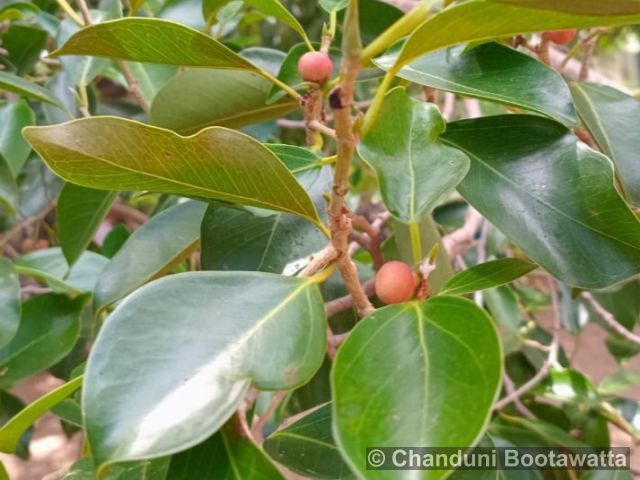
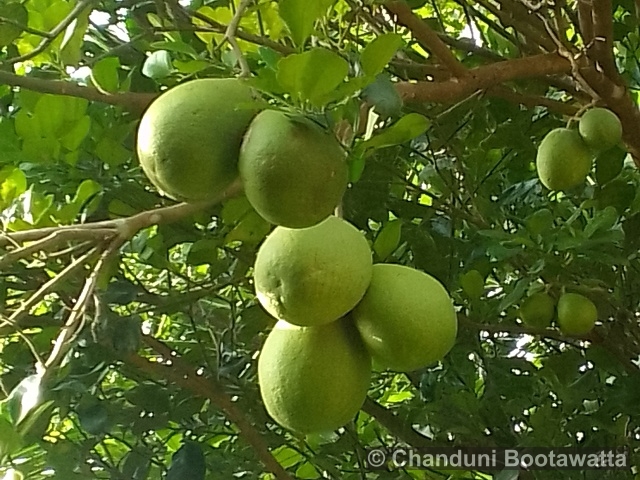
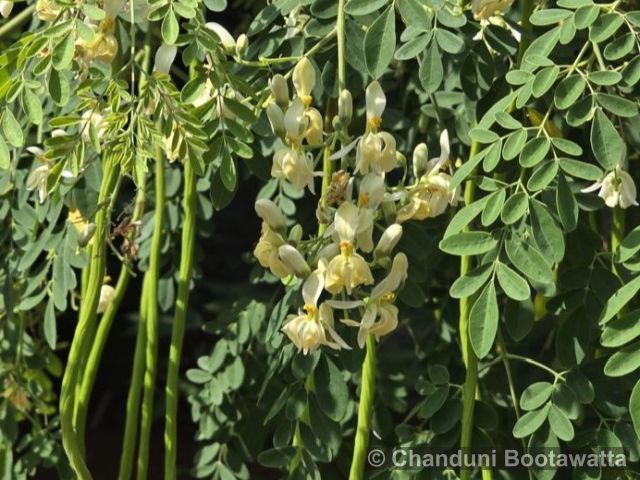
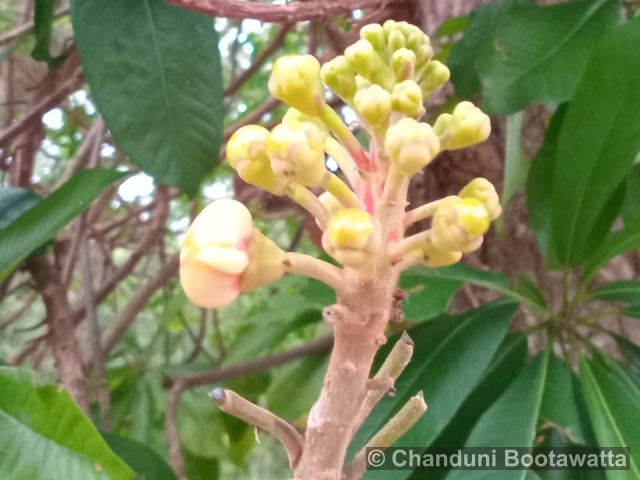
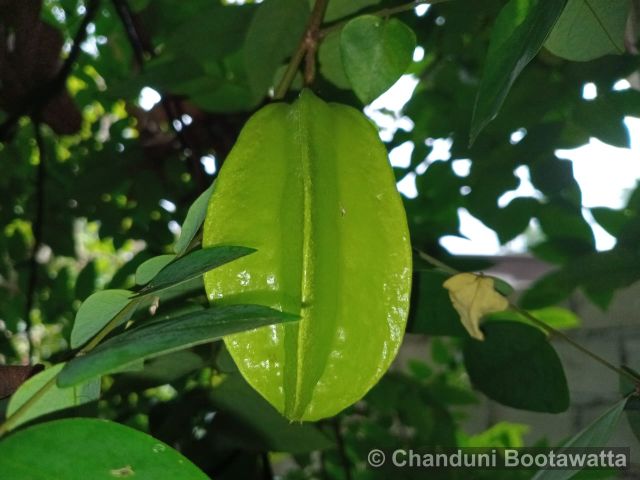
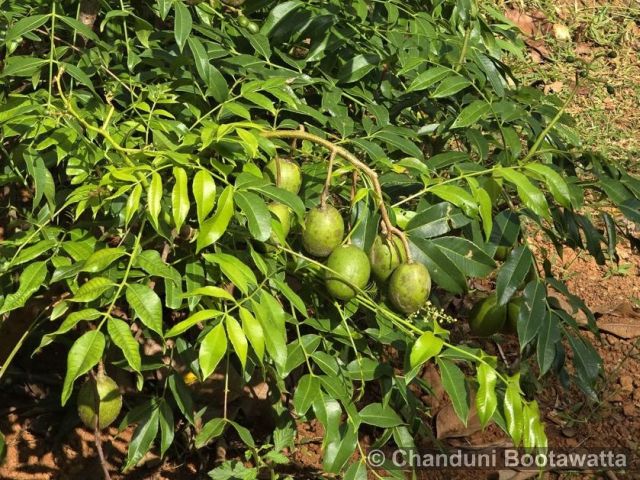
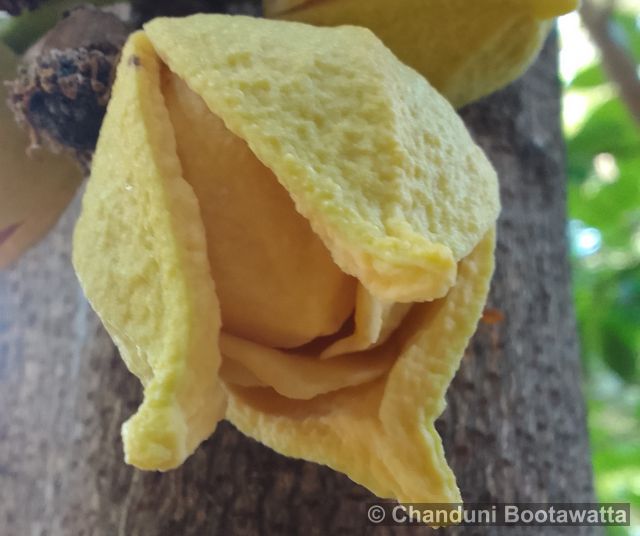
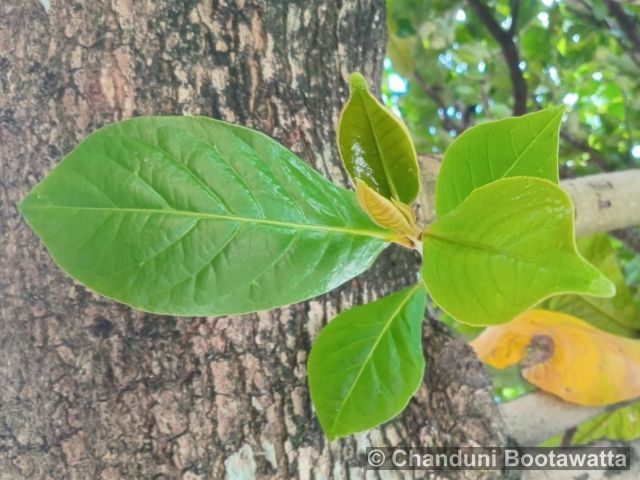
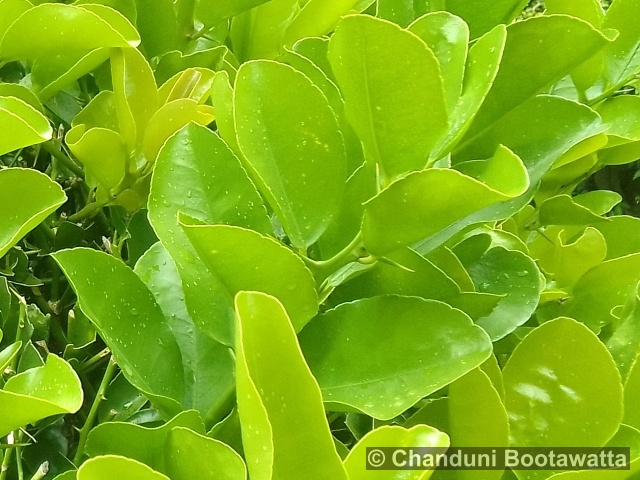
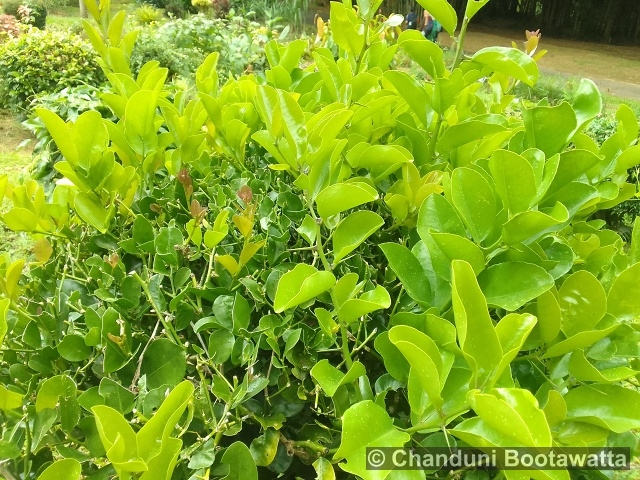
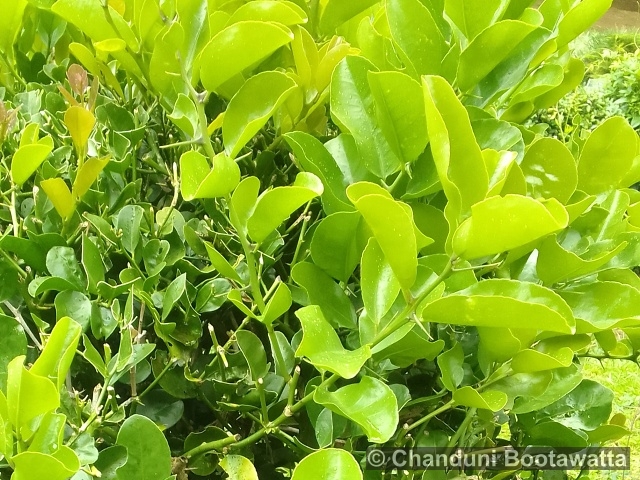
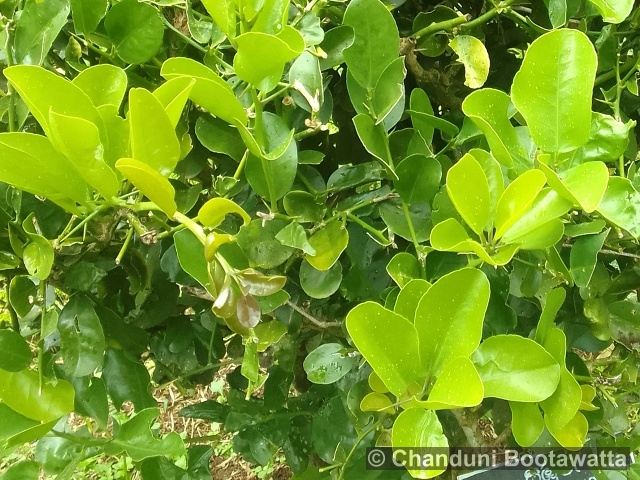
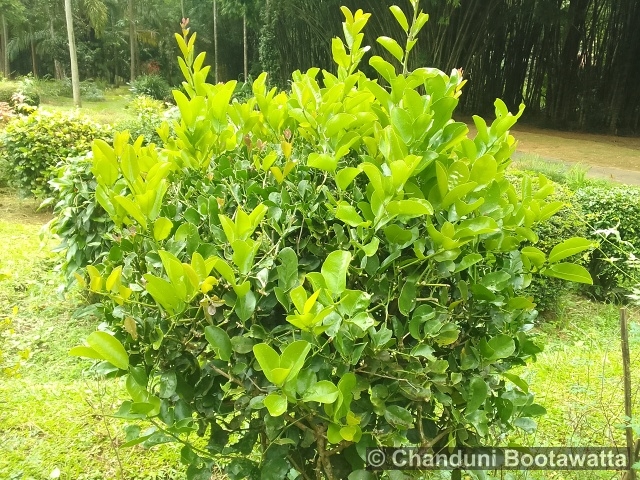
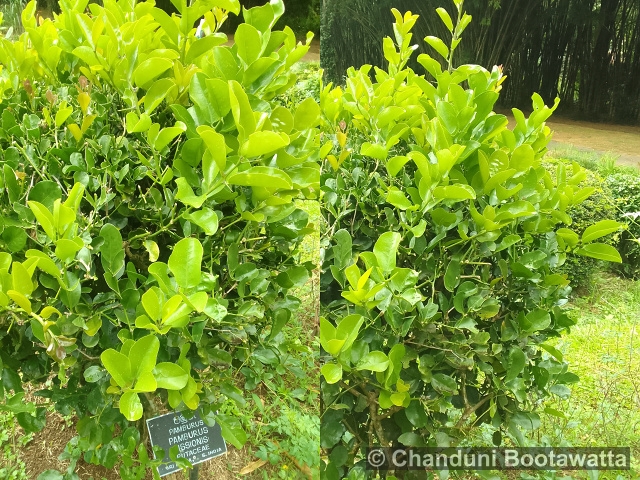
Description: Pamburus missionis is a small, thorny evergreen tree characterized by its thick, glossy, and leathery leaves, which are elliptic-oblong in shape and emit a distinct lemon-like scent when crushed. Its flowers are small, pure white, and highly fragrant, featuring four or five recurved petals that typically fall just hours after opening. The fruit is a globose berry that turns a vibrant orange-yellow when ripe, containing a sticky, mucilaginous pulp with one or two seeds.
Substitutions – Atalantia monophylla (Wild Lime). This thorny shrub has glossy leaves and fragrant white flowers. Its fruit oil is applied externally to treat chronic rheumatism and paralysis. Leaf decoctions are also used for respiratory issues like cough and asthma. – Limonia acidissima (Wood Apple). This slow-growing tree has rough, spiny bark and small leaflets that smell like citrus when crushed. The pulp is a potent tonic for the heart and liver. Its leaves and bark are used to treat indigestion, diarrhea, and dysentery. – Murraya paniculata (Orange Jasmine). An evergreen shrub with glossy dark green leaves and intensely fragrant white flowers. Its bark and leaves have astringent qualities used for bleeding wounds and dysentery. It is also valued for relieving joint pain and body aches.
Ecology: Highly adapted to salt-rich soils and dry environments, featuring leathery leaves and thorns to conserve water. The tree grows best in tropical dry evergreen climates with distinct wet and dry seasons.
General Distribution: Pamburus missionis thrives in the monsoon forests and sandy coastal scrubs of India and Sri Lanka.
Use: This plant is highly valued in traditional Ayurvedic medicine; its leaves are used in decoctions to treat swellings, fractures, and respiratory issues like phlegm, while the fruit yields a fragrant oil traditionally applied to manage chronic rheumatism and paralysis.
Author of text and photos: Chanduni Bootawatta.
Photographed in Peradeniya Botanical Garden, Sri Lanka on 22 June 2025.


 Poslat emailem