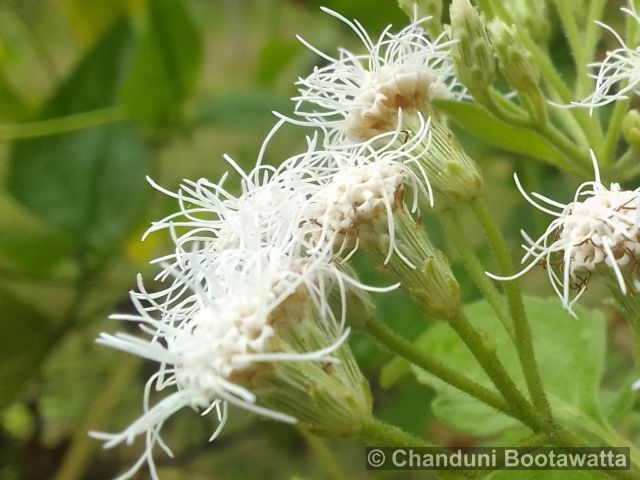
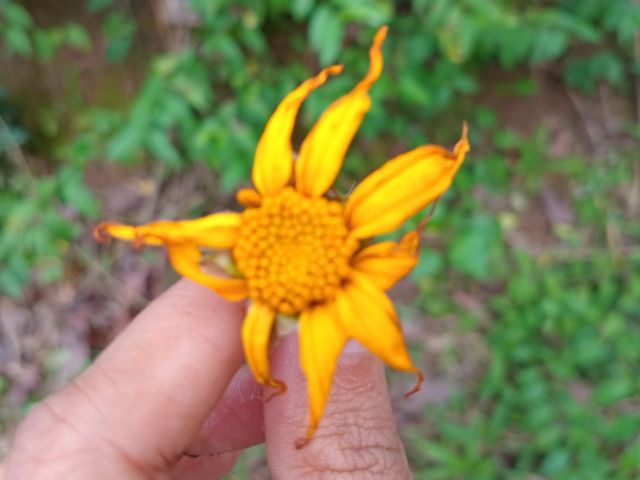
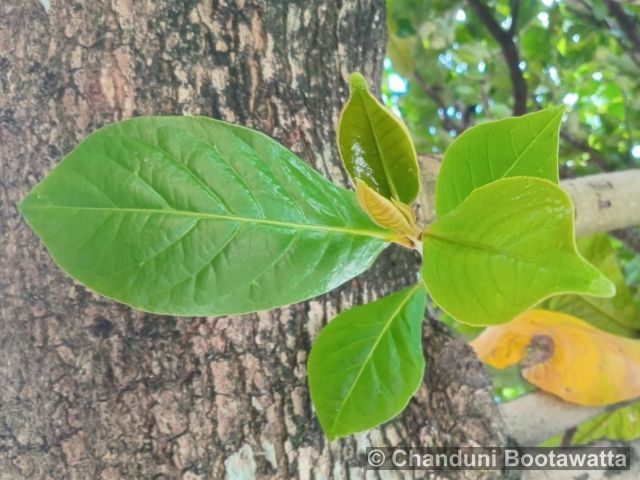
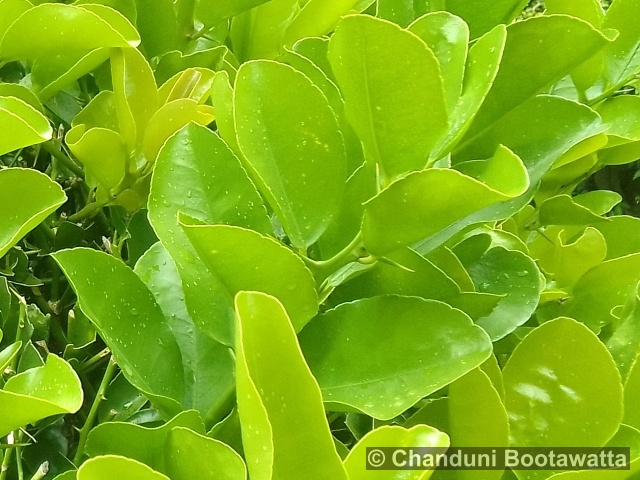
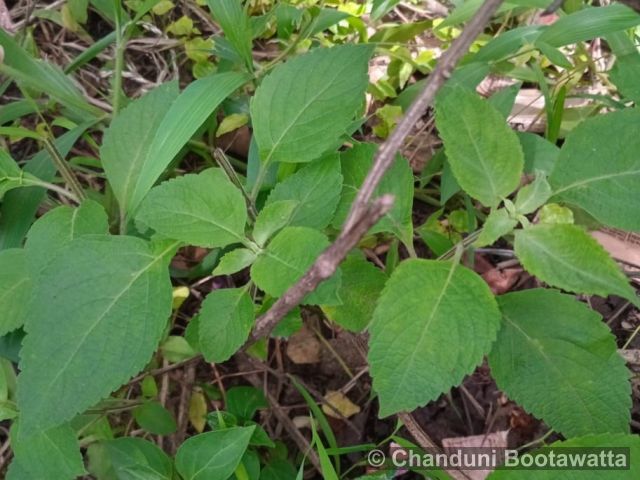
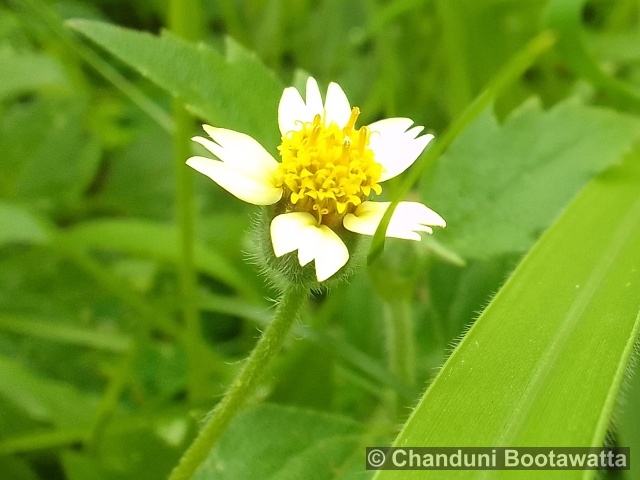
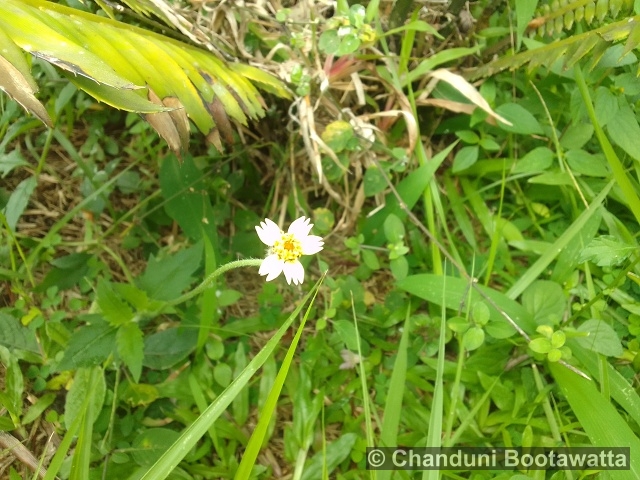
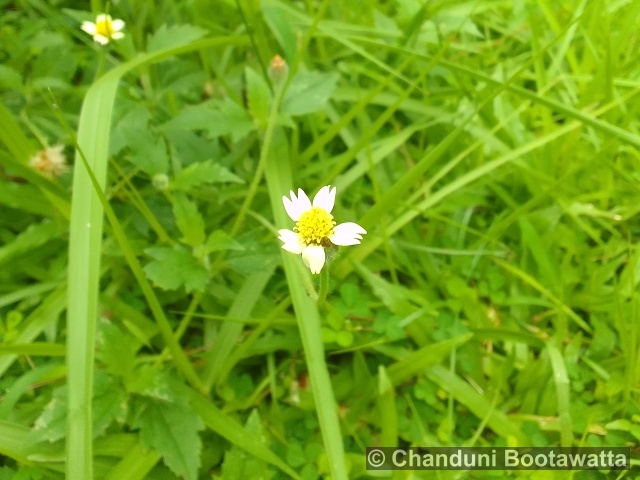
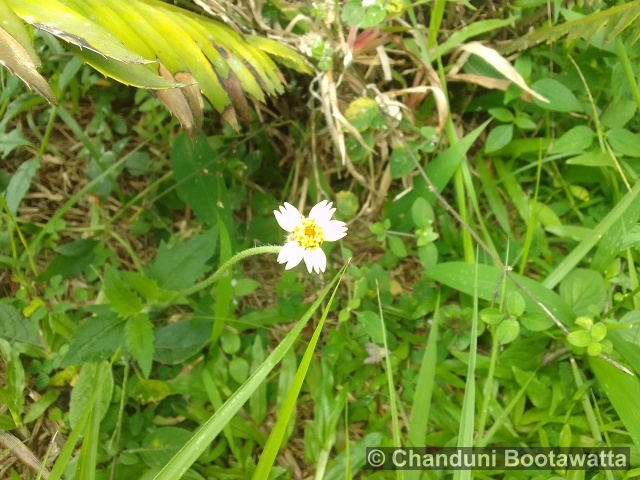
Description: The Tridax procumbens (Tridax daisy) is a small, low-growing herb with a spreading or creeping growth habit and a thin, branching stem. It produces small daisy-like flowers with white petals arranged around a bright yellow central disc, giving it a simple but attractive appearance. The leaves are green, soft, and slightly hairy, with irregular toothed edges and a rough surface, usually growing in opposite pairs along the stem.
Substitutes – Eclipta prostrata: Small, creeping herb with opposite leaves and small daisy-like white flowers. – Ageratum conyzoides: Soft, hairy leaves and a spreading growth habit, similar plant structure but with fluffy flowers. – Wedelia trilobata: Creeping plant with a similar growth pattern and small composite flowers, though usually yellow. – Galinsoga parviflora: Small herb with opposite leaves and tiny daisy-like flowers, closely resembling Tridax in size and form.
Ecology: The Tridax procumbens grows well in warm conditions and prefers moderate to high temperatures (around 20–35°C). It can tolerate dry conditions but grows best with some moisture. The plant is not very demanding and can grow in a wide range of soils, but it prefers well-drained, sandy or loamy soils. It can also survive in poor, disturbed soils due to its hardy nature.
General Distribution: Tridax procumbens is widely distributed in many tropical and subtropical regions around the world. It is commonly found in countries across Asia, Africa, and the Americas. In Sri Lanka, it is a very common roadside and field plant, easily seen in open areas, gardens, and wastelands.
Use: Although often seen as a common weed, this plant is well known for its medicinal value, especially in traditional practices, where it is used to help heal wounds, stop bleeding, and reduce inflammation. It is also used in natural hair care treatments to support hair growth and is valued for its antibacterial and antiseptic properties.
Author of text and photos: Chanduni Bootawatta.
Photographed in Peradeniya Botanical Garden, Sri Lanka on 22 June 2025.


 Poslat emailem