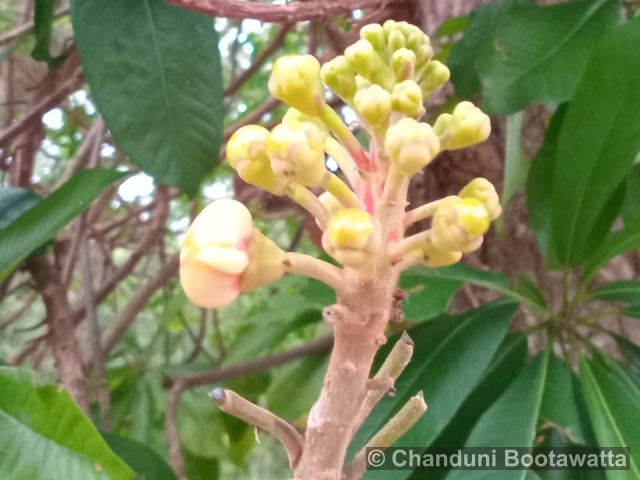
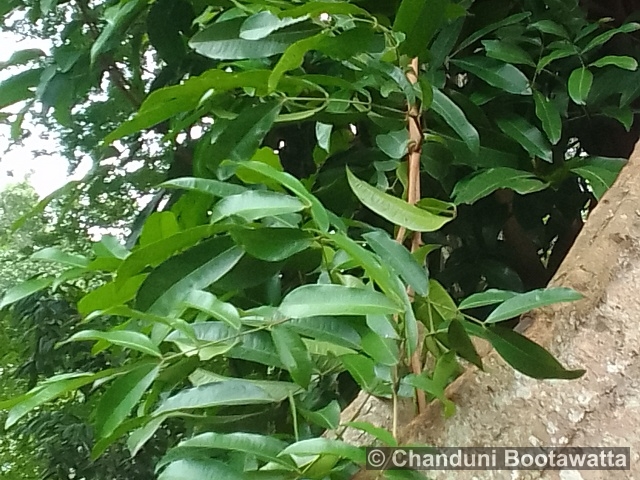
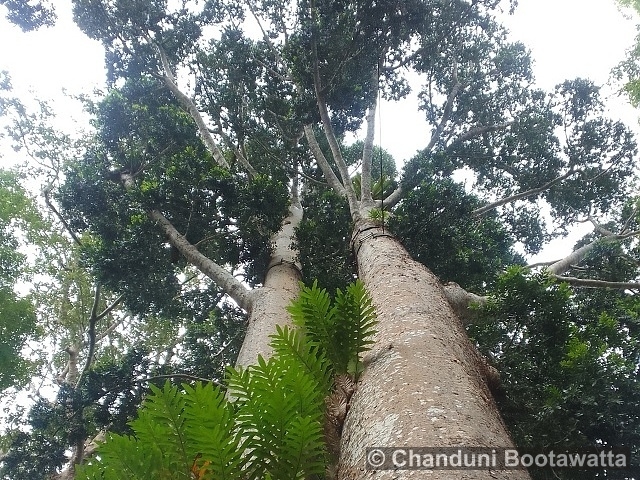
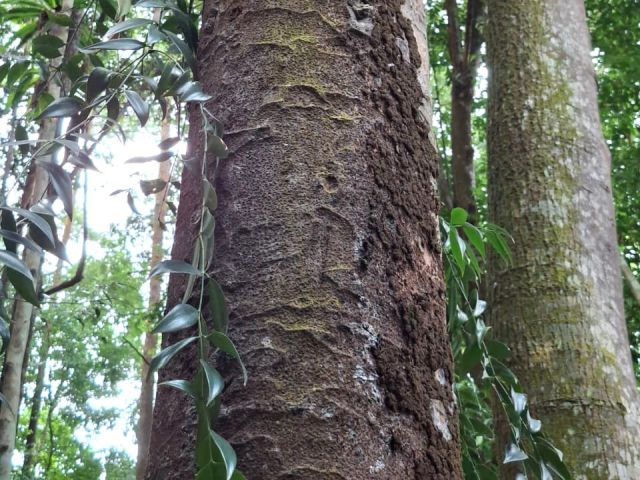
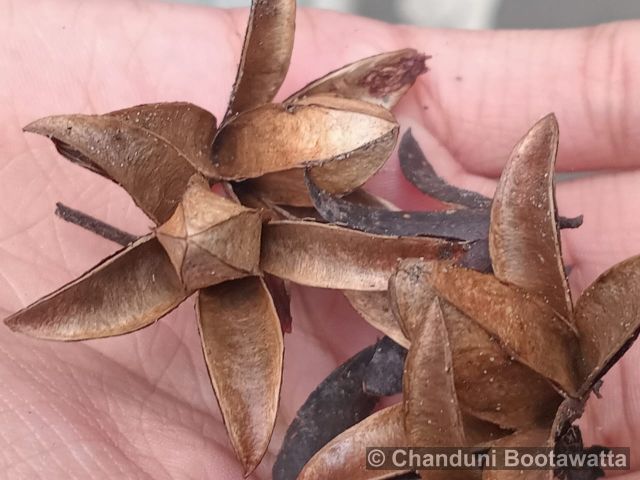
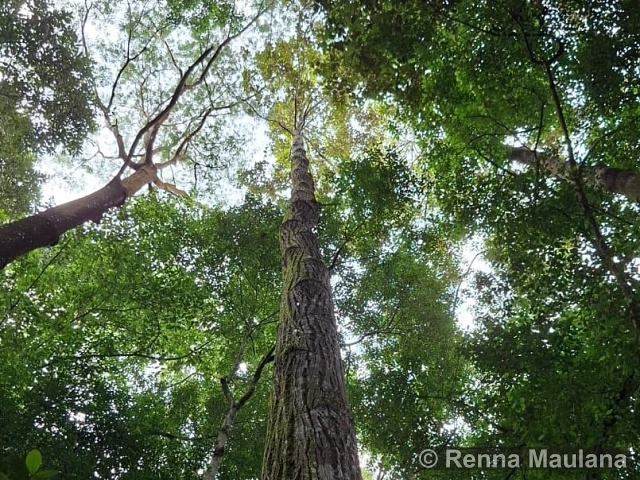
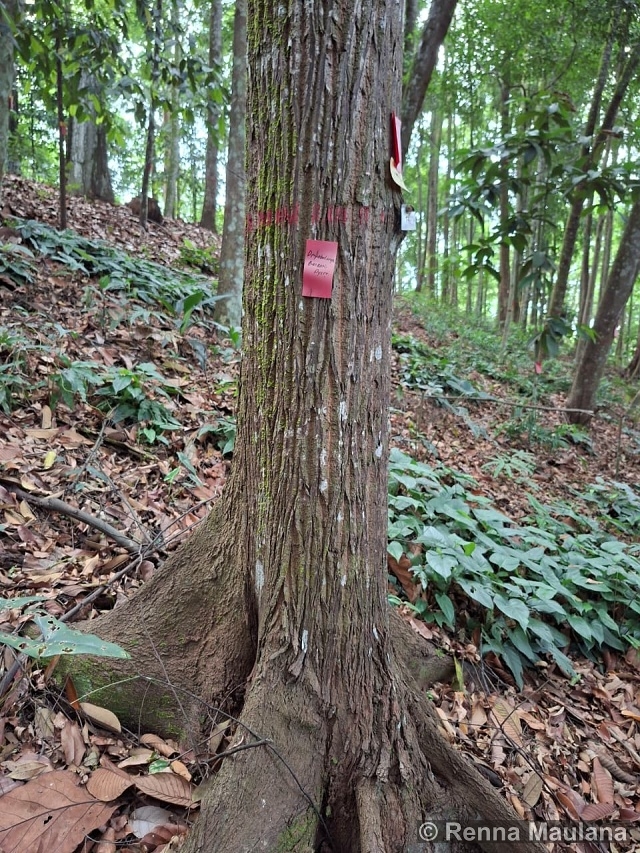
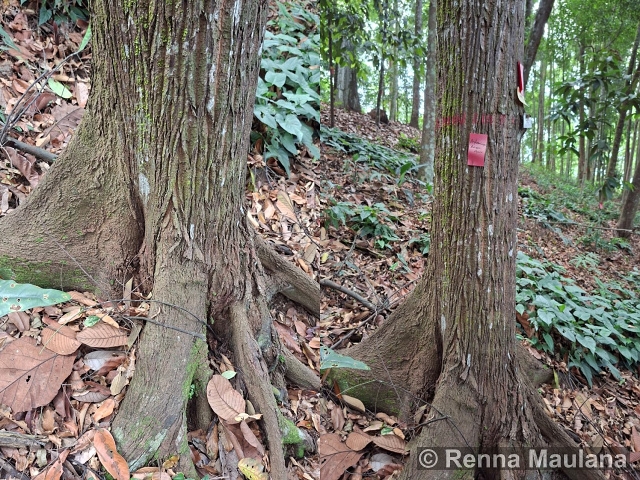
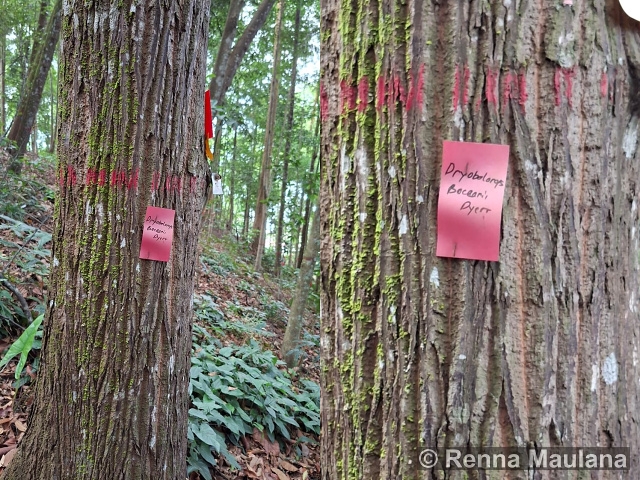
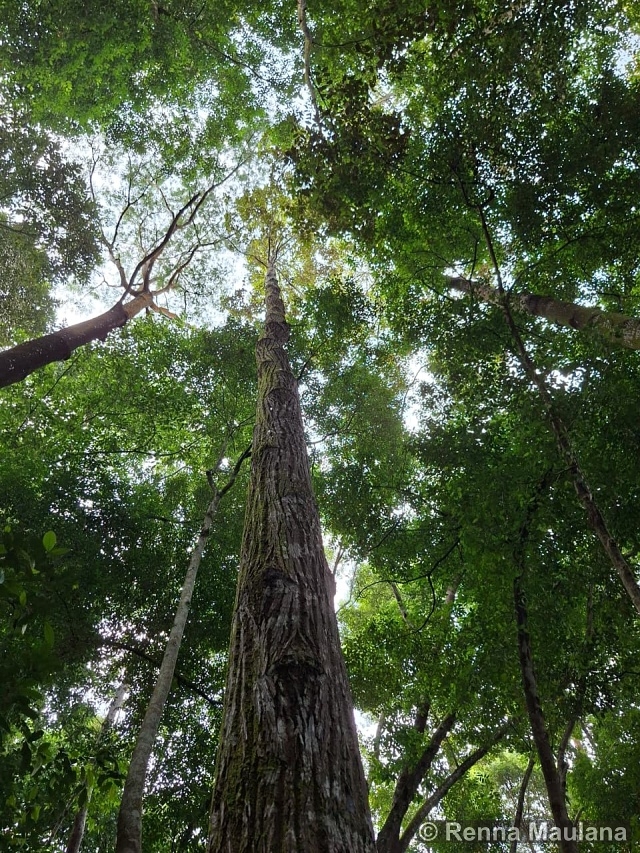
Description: Dryobalanops beccarii is a large emergent tree belonging to the Dipterocarpaceae family. It can grow up to around 55-57 meters in height with a trunk diameter reaching approximately 160 cm. The trunk is tall and straight, and the tree produces resin. The bark is greyish to brown and becomes rough with age. The leaves are simple, alternate, and vary from ovate to lanceolate in shape, with closely spaced secondary veins. The flowers are relatively large, white, and arranged in panicles. The fruit is distinctive, with five elongated wings that aid in wind dispersal.
Related species: Dryobalanops beccarii belongs to the genus Dryobalanops, which includes several tropical tree species distributed in Southeast Asia. A closely related species is Dryobalanops aromatica, which is well known for producing natural camphor. These species share similar structural characteristics but differ in their ecological distribution and economic uses.
Ecology: This species grows in undisturbed mixed dipterocarp forests, typically at elevations up to around 700 meters. It is commonly found on hillsides and ridges, particularly on sandy soils. As an emergent tree, it plays an important role in the forest canopy structure.
General distribution: Dryobalanops beccarii is native to Borneo, including Kalimantan (Indonesia), Sabah, and Sarawak.
Uses: The timber of Dryobalanops beccarii is used for general construction and wood products. Other species within the genus are known for producing camphor and resin, although this species is primarily valued for its wood.
Additional information: Like many Dipterocarpaceae species, Dryobalanops beccarii depends on stable forest conditions and is associated with primary tropical rainforests. Ongoing deforestation in lowland areas may pose a threat to its natural habitat.
Author of text and photos: Renna Maulana.
Photographed in Arboretum Sempaja, East Kalimantan, Indonesia, on 19 April 2026.


 Poslat emailem