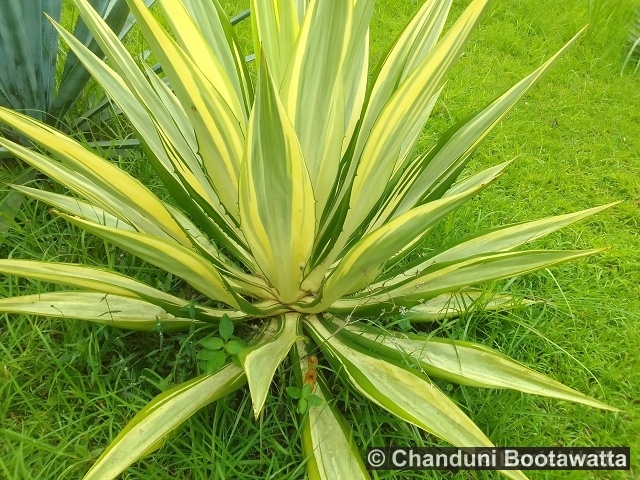
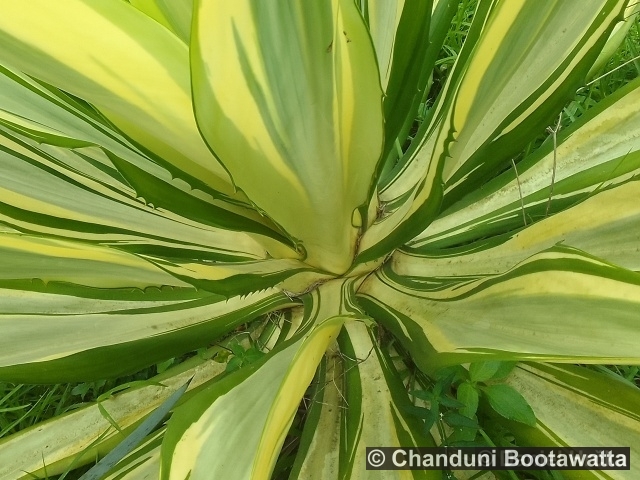
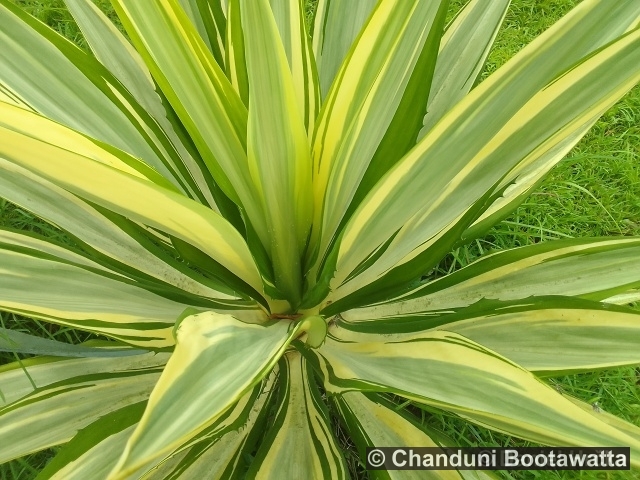
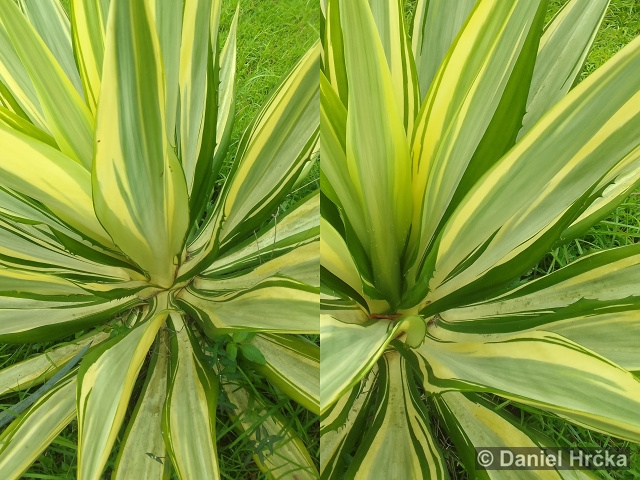
Description: The Furcraea foetida is a large, perennial plant with a rosette growth form, consisting of long, thick, sword-shaped leaves that arise from the base. The leaves are green, fleshy, and often have smooth or slightly serrated edges, sometimes with a pointed tip. The plant can grow quite tall when it flowers, producing a long central stalk with clusters of small, greenish-white flowers.
Substitutes – Agave americana: Large rosette plant with thick, fleshy leaves and a similar structural appearance. – Yucca aloifolia: Sword-like leaves and upright growth habit, resembling the form of Furcraea. – Aloe vera: Fleshy, succulent leaves arranged in a rosette, though smaller in size. – Pandanus tectorius: Long, narrow leaves and a similar spiky, architectural look.
Ecology: The Furcraea foetida grows well in warm conditions and prefers moderate to high temperatures (around 20–35°C). It is highly drought-tolerant and thrives in well-drained soils, especially sandy or rocky soils. The plant does not tolerate waterlogging and can survive in poor soils due to its hardy and adaptable nature.
Distribution: Furcraea foetida is widely distributed in tropical and subtropical regions and is often cultivated as an ornamental plant. It is found in many parts of Asia, Africa, and the Americas. In Sri Lanka, it is commonly grown in gardens, along roadsides, and in coastal areas for decorative and practical purposes.
Use: It is mainly grown as an ornamental plant and is also known for its strong fibers, which are used in making ropes and cords. The plant has a bold and architectural appearance, making it popular in landscaping.
Author of text and photos: Chanduni Bootawatta.
Photographed in Peradeniya Botanical Garden, Sri Lanka on 22 June 2025.


 Poslat emailem