Star Calathea, Pink Lotus Calathea, Brazilian Star
Syn.: Calathea loeseneri J.F. Macbr.
Family: Marantaceae – marantovité
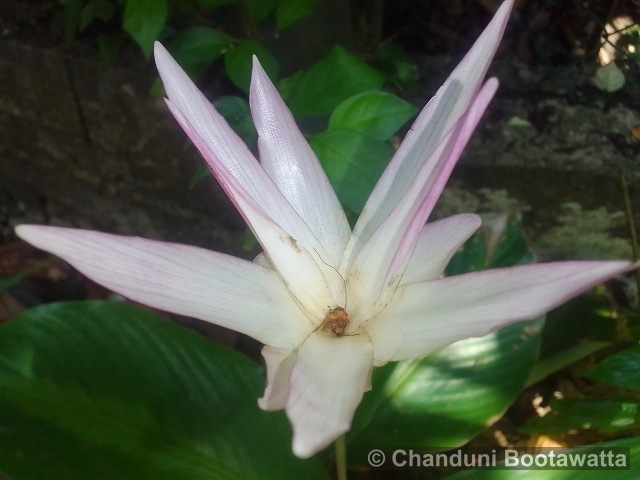
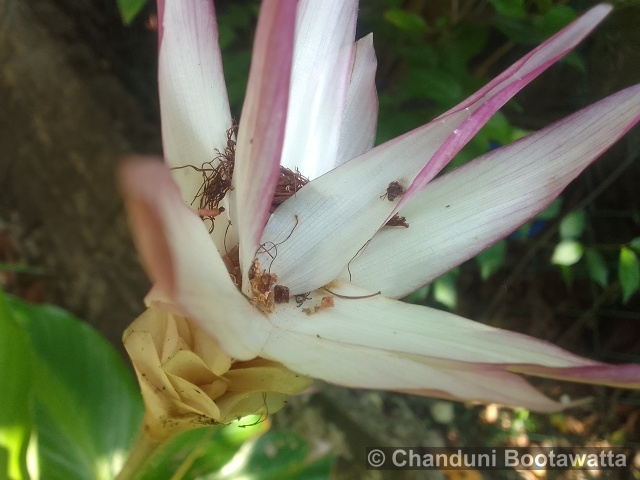
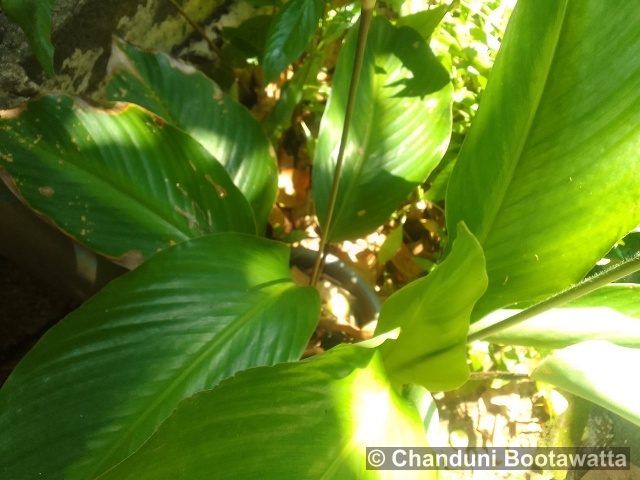
Description: Is a clump-forming, rhizomatous evergreen perennial native to South American rainforests that grows between three to four feet tall and displays „nyctinasty,“ a natural phenomenon where its leaves fold upward at night like hands in prayer. Its large, lance-shaped leaves are a deep glossy green on top with a distinct silver-lime feathering pattern along the central vein, sharply contrasting with their rich purple-burgundy undersides. While its true flowers are small and hidden, the plant produces striking, star-shaped, pale-pinkish ornamental bracts with pointed magenta tips that rise high above the dense foliage on erect stalks.
Substitutes – Goeppertia roseopicta– is a highly ornamental tropical plant known for its round, broad leaves decorated with striking pink, cream, and green patterns. It grows well in warm, humid, and shaded environments, similar to other Calathea-type plants, and is widely used in indoor decoration for its colorful foliage. – Goeppertia ornata– features dark green leaves with elegant pink pinstripe markings that give it a refined and decorative look. It prefers indirect light, high humidity, and moist soil, making it ideal for indoor gardening and tropical plant collections. – Goeppertia makoyana– is commonly called the peacock plant due to its feather-like leaf patterns with light green markings and purple undersides. It grows in a clumping form and thrives in shaded, humid conditions, often used as a houseplant for its unique foliage design.
Ecology: It thrives in warm, humid, and shaded environments such as tropical forest understories. It prefers indirect light, high humidity, and moist but well-drained soil.
Distribution: This species is native to tropical regions of South America, particularly Brazil, and is now widely cultivated in tropical and subtropical countries around the world as an ornamental plant.


 Poslat emailem