Syn.: Seneciohieraciifolius L.; Neoceishieraciifolia (L.) Cass.; Ptilerishieraciifolius (L.) Raf.; Erechtiteshieraciifolia; Erechtiteshieracifolia (L.) Raf. ex DC.; Erechtiteshieraciifolius var. typicus Fernald
Family: Asteraceae
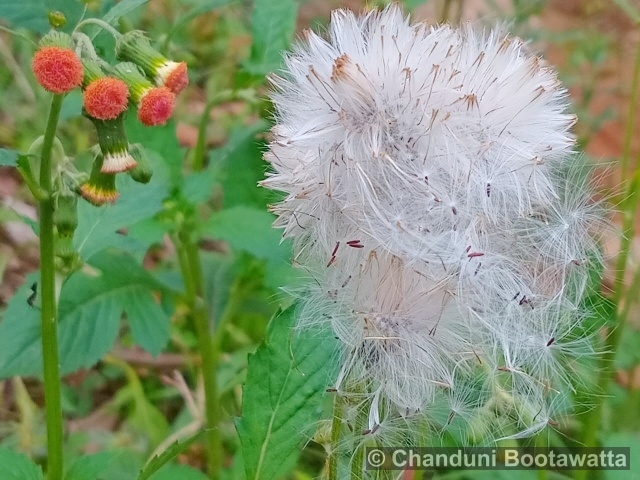
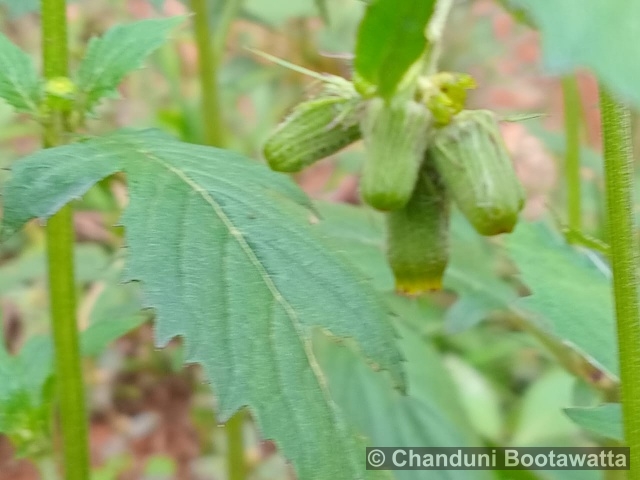
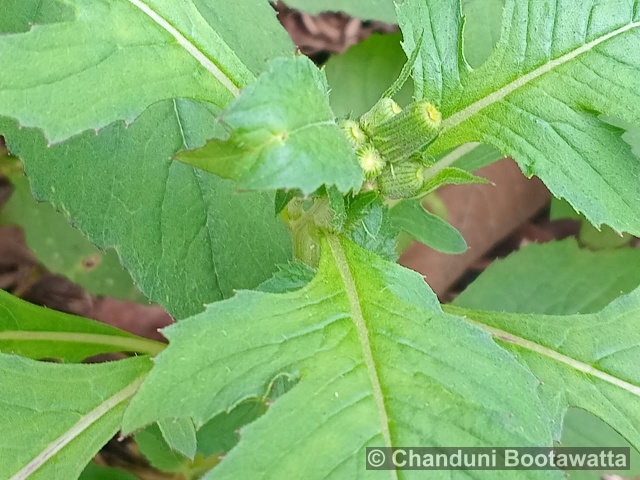
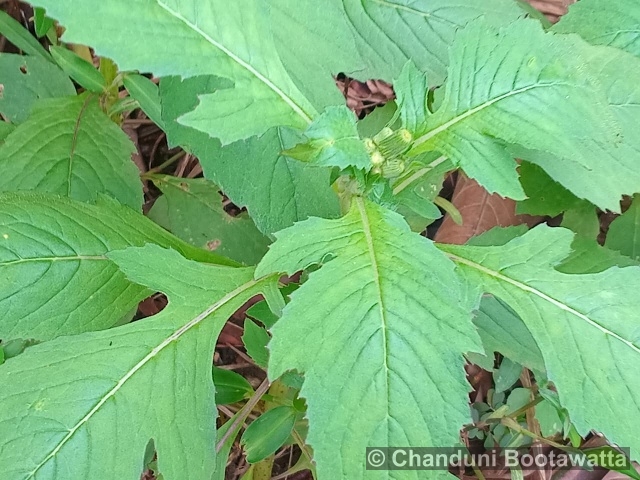
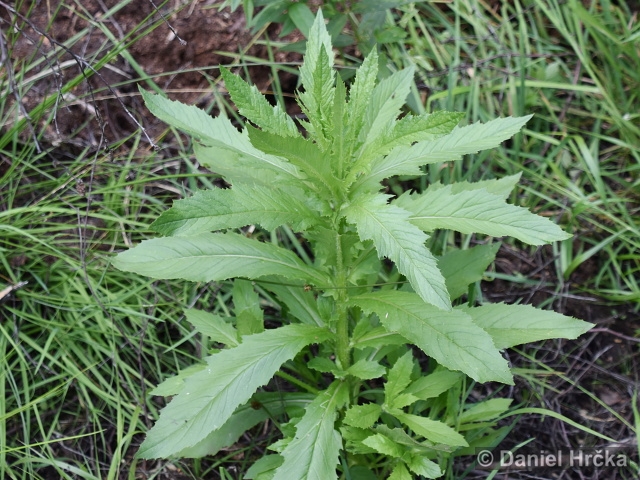
Description: Erechtites hieracifolia is a fast-growing annual herb found in disturbed habitats such as burned forests, roadsides, and cleared lands. It features an upright, ridged stem that can grow quite tall, reaching up to 1.5 to 2.5 meters in ideal conditions. The leaves are simple, soft, and lance-shaped to deeply lobed with irregular toothed margins, emitting a slightly aromatic, unpleasant smell when crushed. The upper leaves are typically sessile and clasp the stem. The flowers are small, greenish-white to pale yellow, and arranged in clusters of urn-shaped heads at the top of the plant. These flower heads appear permanently closed, with only the tips of the disc florets slightly emerging. Blooming mainly from late summer to autumn, the plant produces small fruits (achenes) equipped with fine, fluffy white hairs (pappus) that resemble dandelion tufts and facilitate efficient wind dispersal.
Similar Species – Senecio vulgaris (Common groundsel): A fast-growing annual weed found in disturbed soils. Like E. hieracifolia, it belongs to the Asteraceae family and has similar urn-shaped, rayless flower heads that look permanently closed. However, Senecio vulgaris is significantly smaller (usually under 50 cm) and features bright yellow disc florets visible at the top. – Conyza canadensis / Erigeron canadensis (Canadian horseweed): A tall, erect pioneer plant that rapidly colonizes open disturbed areas and fields. It shares a very similar growth habit, height, and wind-dispersal method. It can be distinguished by its much narrower, bristly leaves and clusters of tiny flower heads that display distinct, small white-to-pale-pink ray petals. – Taraxacum officinale (Dandelion): A hardy, ubiquitous colonizer of disturbed ground. While it shares a similar wind-dispersal mechanism (fluffy white pappus) and early-succession strategy, it is easily distinguished by its low-growing rosette growth habit, lack of a tall leafy stem, and large, solitary bright yellow flower heads.
Ecology: Erechtites hieracifolia is a typical pioneer species that rapidly colonizes disturbed habitats such as burned forests, cleared land, roadsides, and abandoned fields. It prefers nutrient-rich to moderately fertile soils that have been recently disturbed and exposed to sunlight. The plant grows best in full sun, although it can tolerate light shade in early stages. It thrives in warm temperate to tropical climates, with optimal growth in temperatures around 20°C to 30°C. While it can tolerate short dry periods once established, it also adapts well to moist or saturated conditions; in its introduced range in Central Europe, it has increasingly begun to colonize and threaten degraded peatlands and vulnerable wetland communities. Its fast life cycle and wind-dispersed seeds allow it to quickly spread. However, while it helps stabilize soil in its native ecosystem, its massive expansion in invasive territories often disrupts natural plant succession and threatens local biodiversity.
Distribution: Erechtites hieracifolia (known in the Czech Republic by its local name starčkovec jestřábníkolistý) is native to North and South America, where it is widely distributed from southeastern Canada through the USA and Mexico down to Argentina. As a naturalized and often invasive weed, it has gradually spread to many other parts of the world, including Asia, Africa, Australia, and the Pacific islands. In areas outside its native range, such as Sri Lanka, it colonizes disturbed habitats, roadsides, and forest edges. It plays a highly specific role in Europe, including the Czech Republic, where it is classified as a naturalized neophyte with a strongly invasive and expansive character. In the Czech Republic, it was first recorded at the end of the 19th century and is currently spreading massively, particularly in forest clearings, glades, logging gaps, and along forest tracks after timber harvesting. Forest mechanization and the transport of harvested timber significantly contribute to its rapid spread in Czech forests.
Use and Ecological Impact: The plant has limited direct human use. In its native range, it is ecologically important as a pioneer species that quickly colonizes disturbed soil, helps prevent erosion, and supports insects and pollinators in recovering ecosystems. However, in regions where it is invasive, such as Central Europe, this aggressive colonization poses a threat to local biodiversity. By forming dense populations on clear-cuts and degraded habitats, it outcompetes native flora and can significantly alter the natural recovery process of the ecosystem.
Authors of text: Chanduni Bootawatta, Daniel Hrčka
Authors of photos: Chanduni Bootawatta, Daniel Hrčka
Photographed in Galle, Sri Lanka on 18 May 2026 (by Chanduni Bootawatta) and in the Doupata settlement near Dědovice in the Písek region, Czech Republic on 7 July 2026 (by Daniel Hrčka).


 Poslat emailem