Syn.: Psittacus aterrimus; Chameirhynchus aterrimus (J. F. Gmelin, 1788)
Family: Cacatuidae (Cockatoo family)
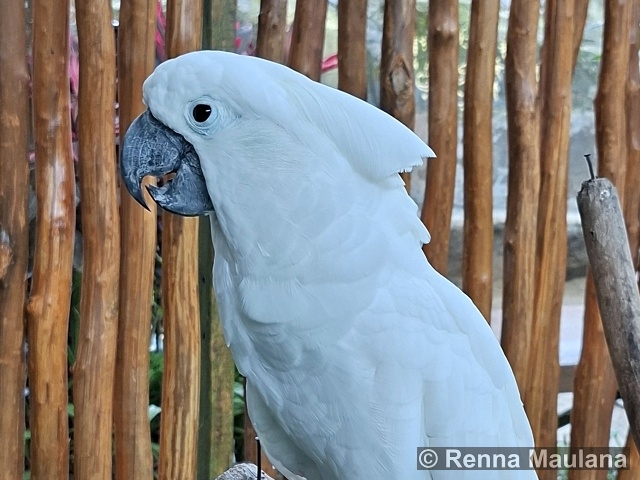
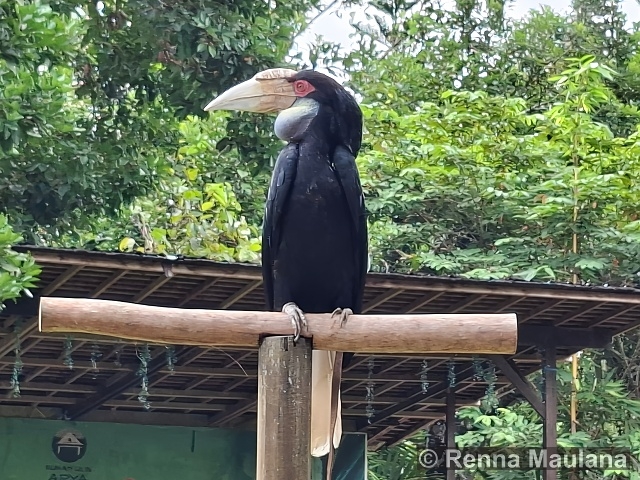
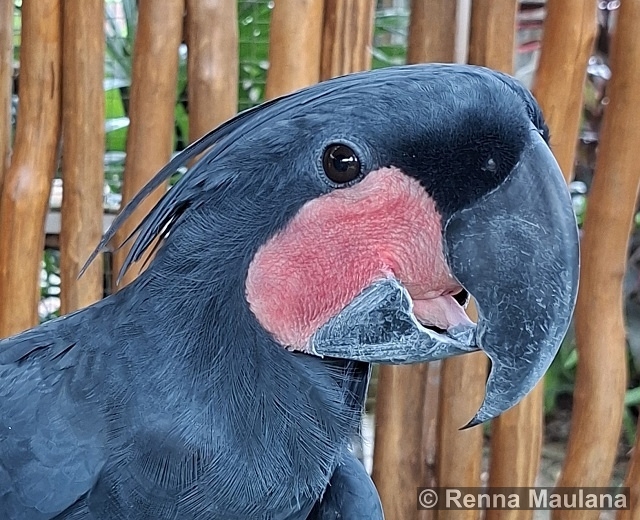
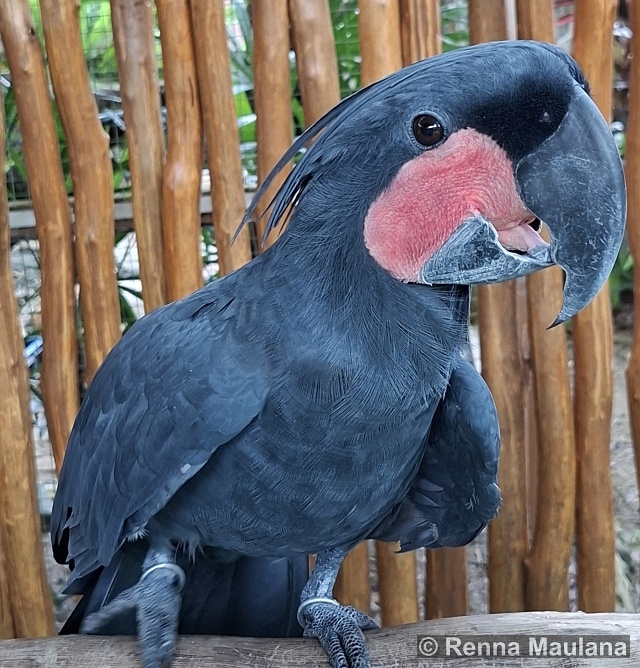
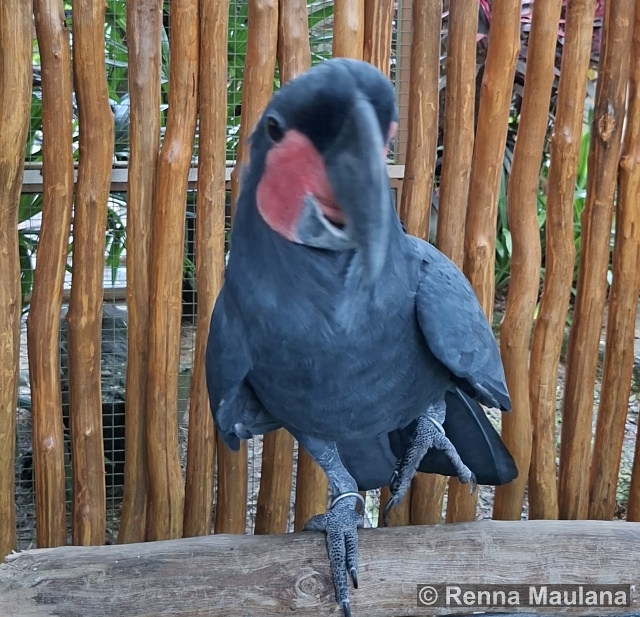
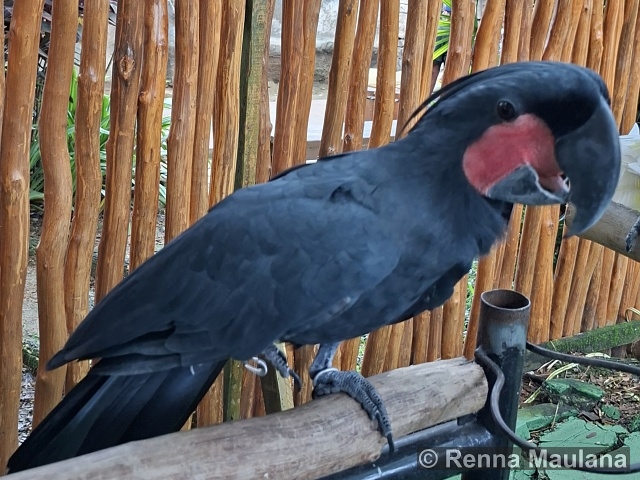
Description: The Palm Cockatoo is one of the largest and most impressive cockatoo species in the world. Adults can reach around 55-60 cm in length and weigh between 500-1,200 grams, with males generally being larger than females. Its body is covered in dark, smoky gray to black feathers. One of its most distinctive features is bird also has bare red cheek patches that can become brighter or paler depending on stress levels, health conditions, or excitement. The Palm Cockatoo possesses an enormous dark gray beak specially adapted for cracking very hard nuts and seeds. The upper and lower parts of the beak do not fully close, making its reddish tongue with a darker tip often visible.
Related Species: Probosciger aterrimus is the only surviving species within the genus Probosciger, making it evolutionarily unique. Within the cockatoo family (Cacatuidae), it is closely related to other black cockatoos from Australia, such as the Red-tailed Black Cockatoo (Calyptorhynchus banksii) and the Yellow-tailed Black Cockatoo (Zanda funerea).
Ecology & Behaviour: Palm Cockatoos mainly feed on hard seeds, nuts, fruits, and young shoots. Their powerful beaks allow them to open extremely hard shells that many other birds cannot crack. They usually nest inside large tree hollows in tall old-growth trees. Unlike many other cockatoo species, Palm Cockatoos often line their nests with small broken twigs as nesting material. This species has a very slow reproductive cycle. Females generally lay only one egg every two years, and raising a chick requires several months of parental care.
General Distribution: Palm Cokcatoos are native to Papua, including both the Indonesian region of Western New Guinea and Papua New Guinea. They are also found on nearby islands such as the Aru Islands and in the Cape York Peninsula of northern Australia. Their preferred habitats include tropical lowland rainforests, forest edges, and open woodland or savanna forests up to around 1,300 meters above sea level.
Additional Information: According to the IUCN Red List, the Palm Cockatoo is classified as near threatened. It is also listed under CITES Appendix I, meaning international commercial trade is strictly prohibited.
Main Threats: The major threats to this species include habitat loss caused by deforestation, illegal logging, forest fires, and illegal wildlife trade.
Unique Fact: The Palm Cockatoo is famous for its drumming behaviour. Males may use sticks or hard seed pods to strike hollow tree trunks, creating loud rhythmic sounds to attract mates and defend territory.
Author of text and photos: Renna Maulana
Photographed in Rumah Ulin Arya, Samarinda, East Kalimantan, Indonesia, on 10 May 2026.


 Poslat emailem