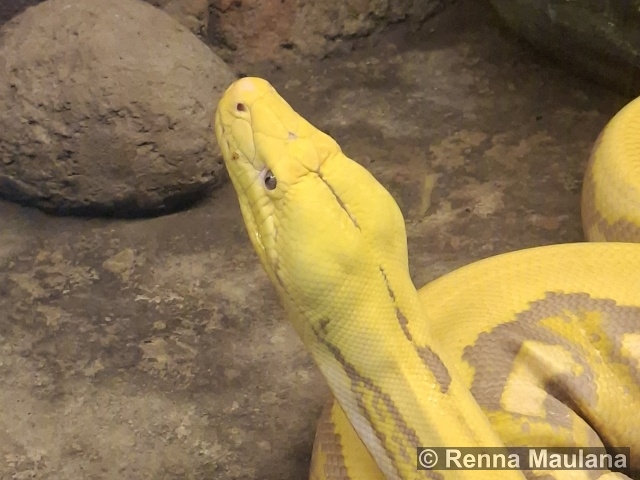
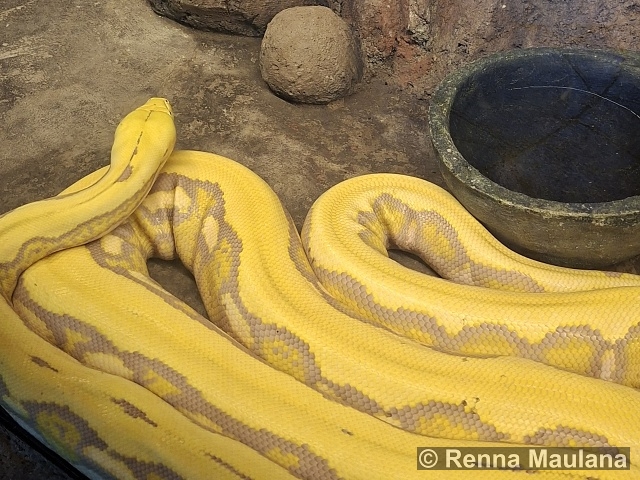
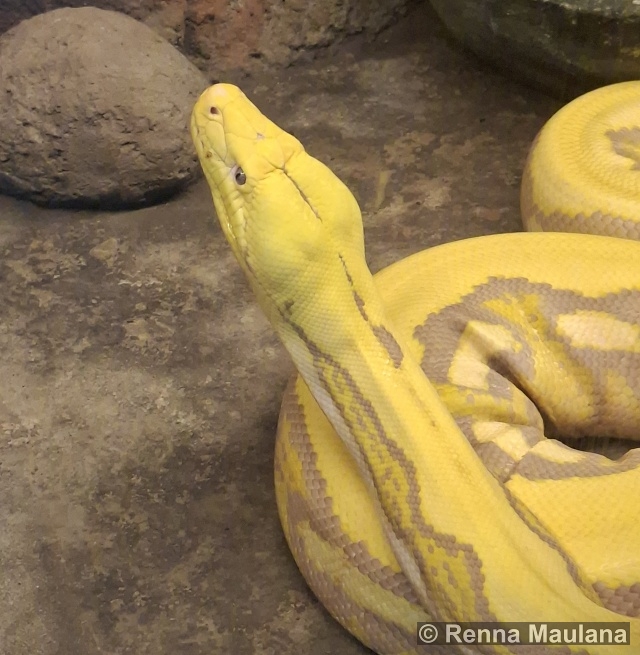
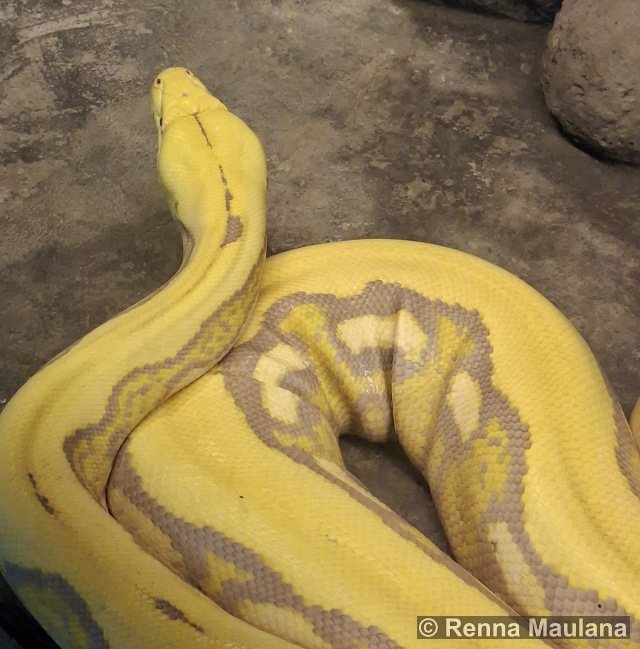
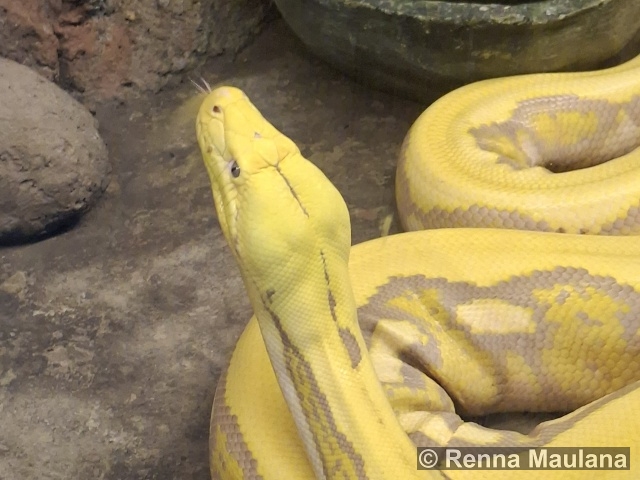
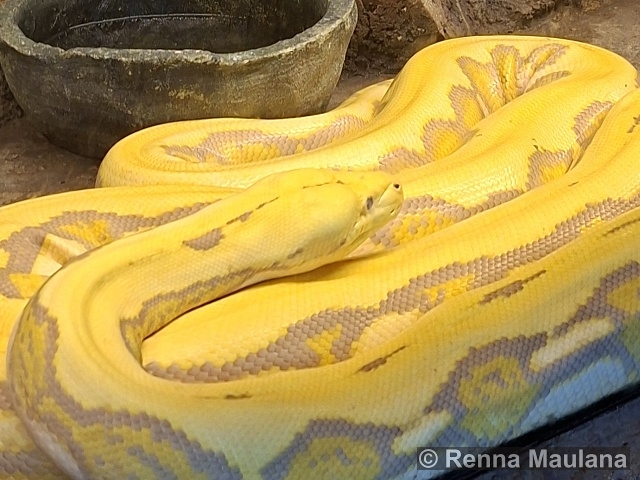
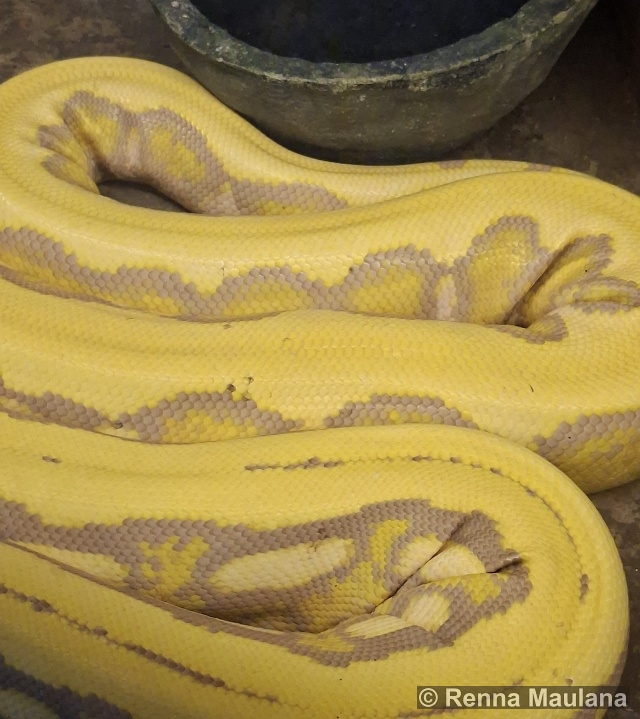
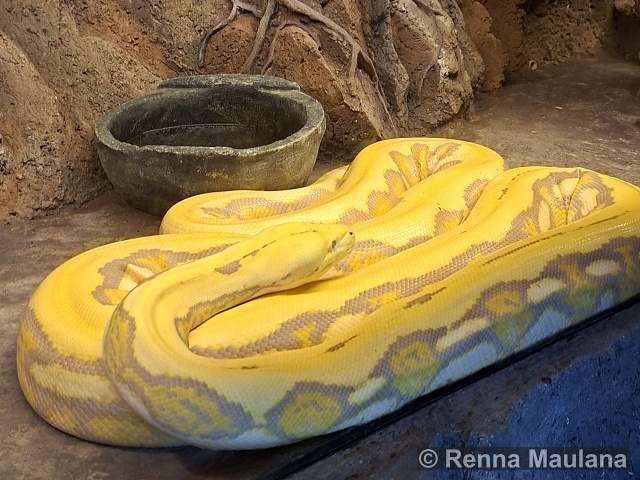
Color Morph: Lavender Albino (often simplified in zoos as “Albino”). This morph is characterized by reduced melanin and altered pigmentation, resulting in a bright yellow base coloration with lavender or purplish-gray patterning.
Related species and subspecies variation: The closest relative of Malayopython reticulatus within the same genus is the Timor python (Malayopython timoriensis), which is smaller in size and occupies a more restricted range. In Indonesia, Malayopython reticulatus also shows notable geographic variation in the form of island subspecies. Examples include Malayopython reticulatus jampeanus from Jampea Island and Malayopython reticulatus saputrai from Selayar Island. These island populations exhibit a reduced body size compared to mainland individuals, a phenomenon known as island dwarfism, which is commonly observed in isolated island ecosystems due to limited resources and ecological pressures.
Description: Malayopython reticulatus is the longest snake species in the world. It is well known for its complex reticulated pattern that resembles a net or batik-like design along the body. In the observed morph, the black pigmentation is reduced rather than completely absent, resulting in yellow tones combined with lavender or purple-gray markings. The eyes are not red as in classic albino forms; instead, they appear dark, ranging from grayish to black, with clearly visible pupils. Adult individuals can reach lengths of around 6-9 meters in the wild, while those in captivity typically range from 3-5 meters.
Ecology: This species is highly adaptable and is found across a wide range of habitats, including tropical rainforests, mangroves, agricultural areas, and even densely populated human settlements, such as drainage systems or rooftops. It is an ambush predator and carnivorous, relying on heat-sensing pits along its jaws to detect warm-blooded prey such as rodents, birds, and other mammals.
Reproduction: The species is oviparous. Females may lay between 15 and 80 eggs per clutch. A unique maternal behaviour is observed during incubation, in which the female coils around the eggs and uses muscular contractions to generate heat, maintaining an optimal incubation temperature until hatching.
General distribution: Malayopython reticulatus is widely distributed across Southeast Asia, including Indonesia (Sumatra, Java, Kalimantan, Sulawesi, and Nusa Tenggara), Malaysia, Thailand, the Philippines, Vietnam, and parts of South Asia, such as eastern India and Bangladesh.
Additional information: According to the IUCN Red List, the species is classified as Least Concern due to its high adaptability to human-altered environments. It is also listed under CITES Appendix II, meaning international trade is regulated to prevent population decline. Reticulated pythons are strong swimmers and are capable of crossing open water, which helps explain their wide distribution across islands in Southeast Asia. In the wild, albino or strongly hypopigmented morphs rarely survive to adulthood due to their lack of camouflage, making them more vulnerable to predators.
Author of text and photos: Renna Maulana
Photographed in Rumah Ulin Arya, Samarinda, East Kalimantan, Indonesia, on 10 May 2026.


 Poslat emailem