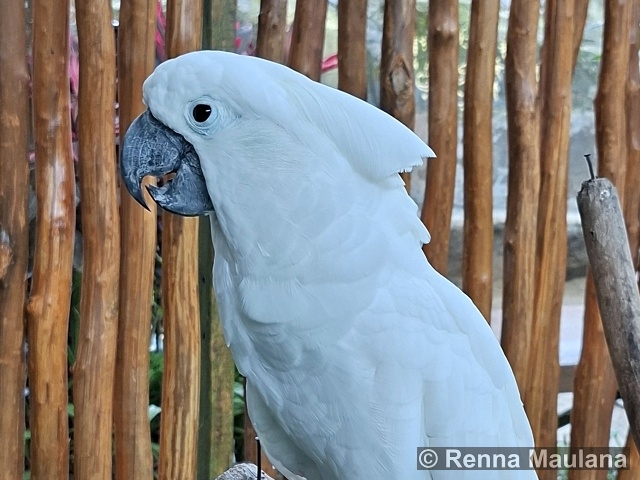
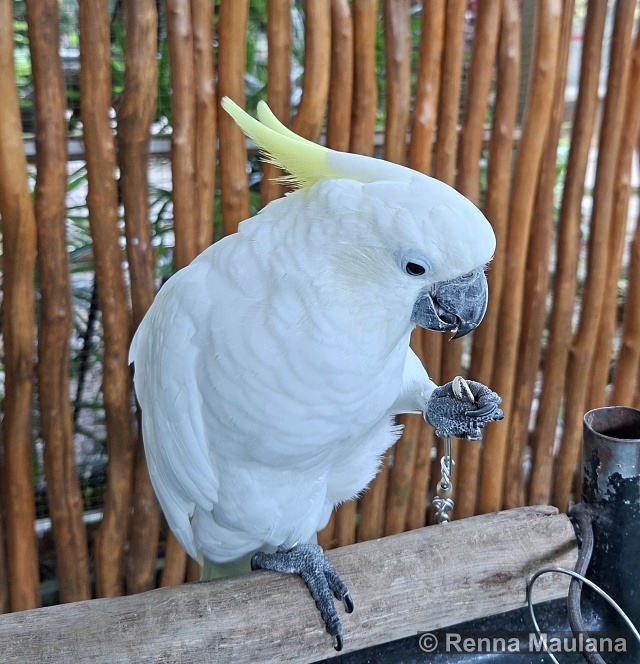
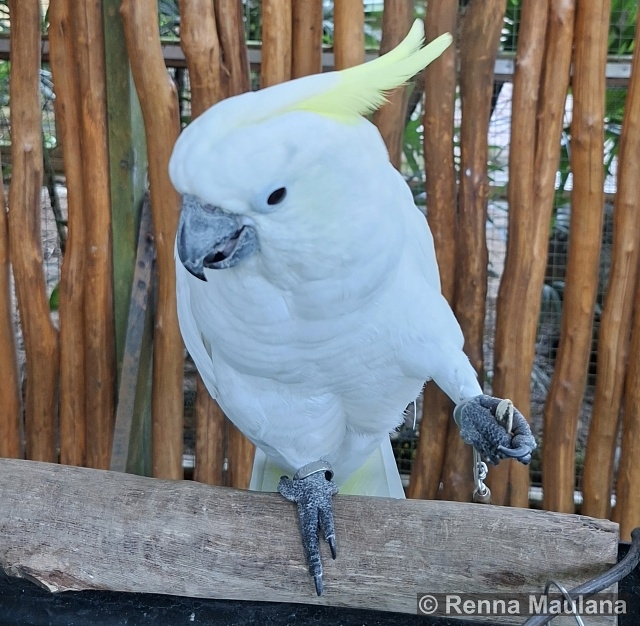
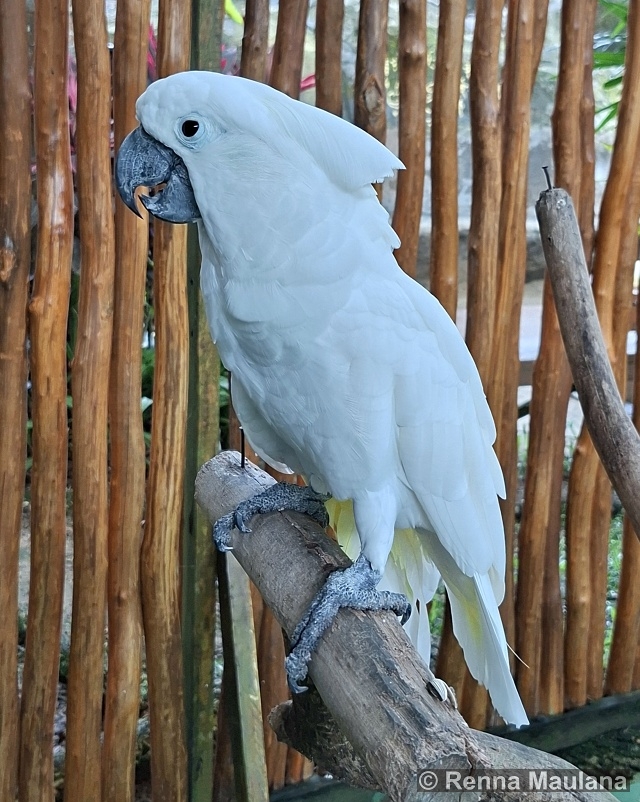
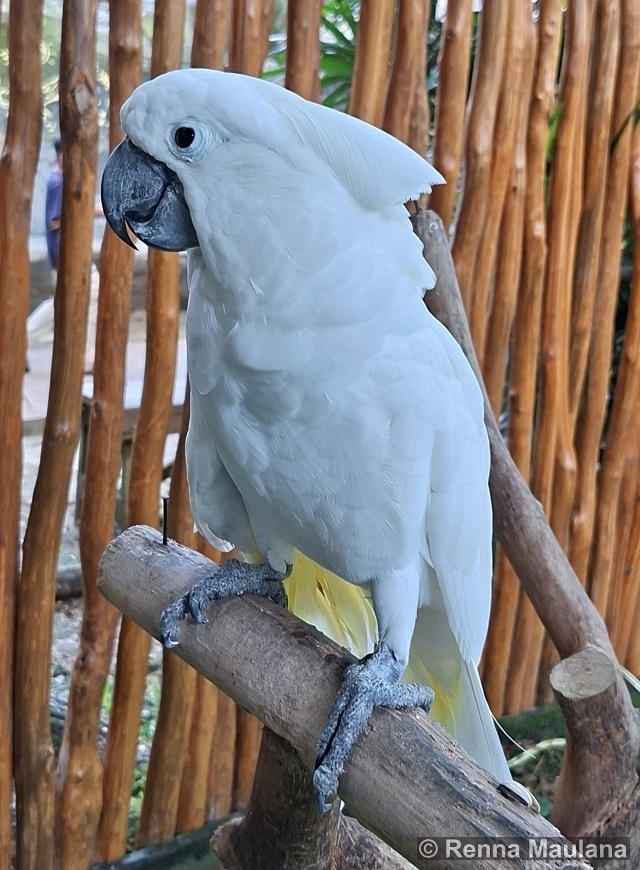
Description: The White Cockatoo is a medium to large-sized cockatoo species measuring around 46-50 cm in length. Its body is almost entirely covered in pure white feathers, with soft yellow coloration visible beneath the wings and tail during flight. Its most distinctive feature is the large white crest that expands into an umbrella-like shape when raised. The species also has a strong dark gray beak, dark gray feet, and pale bluish-white skin around the eyes. Adult females usually have reddish-brown irises, while males tend to have darker eyes.
Related Species: The White Cockatoo belongs to the genus Cacatua and is closely related to other large cockatoos such as the Salmon-crested Cockatoo (Cacatua moluccensis) and the Yellow-crested Cockatoo (Cacatua sulphurea).
Ecology: While Cockatoos feed on fruits, seeds, nuts, berries, and occasionally insects. They use their feet skillfully to hold food while eating. They are highly social and monogamous birds that usually live in pairs or small groups. Their loud vocalizations help them communicate through dense tropical forests. They nest inside large tree hollows in lowland rainforests and secondary forests.
General Distribution: The White Cockatoo is endemic to Indonesia and naturally occurs in the North Maluku Islands, including Halmahera, Bacan, Ternate, Tidore, Kasiruta, and Obi.
Additional Information: According to the IUCN Red List, the White Cockatoo is classified as endangered. Illegal wildlife trade and habitat destruction remain the main threats to its population.
Unique Fact: The White Cockatoo is known for its remarkable intelligence and affectionate behaviour. In aviculture, they are sometimes nicknamed „Velcro Birds” because they enjoy close interaction and attention from humans.
Author of text and photos: Renna Maulana
Photographed in Rumah Ulin Arya, Samarinda, East Kalimantan, Indonesia, on 10 May 2026.


 Poslat emailem